Heated Driveways: The Independent 2026 Guide
Is it worth $15,000 to never shovel snow again? We break down the real operating costs, the electric vs. hydronic debate, and why it might be cheaper than a plow service.
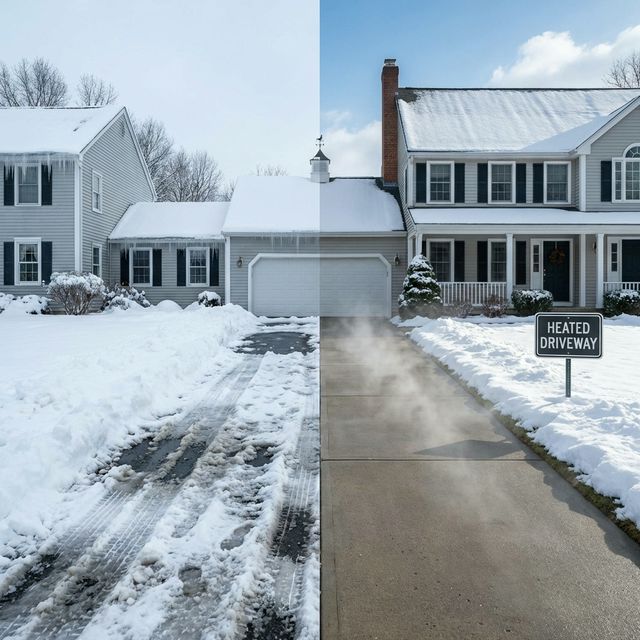
1. The Winter Morning Dream
Imagine it is 6:00 AM on a Tuesday in February. A heavy storm has dumped 10 inches of snow overnight. The neighborhood is filled with the roar of snowblowers and the scrape of plastic shovels against concrete.
You sip your coffee, look out the window, and see... pavement. Dry, clear pavement. No ice, no slush, no back-breaking labor.
This is the promise of a heated driveway (technically called a "snow melt system"). For decades, it was a luxury reserved for Aspen chalets. In 2026, improved technology and rising plow service costs have made it a rational financial decision for mid-range homes in snow belts.
2. How It Actually Works
A heated driveway is simply a large radiant radiator buried underground. It doesn't need to be "hot" like a stovetop - it just needs to be above 32°F (0°C).
The Physics of Melting
When sensors detect moisture (snow) AND freezing temperatures, the system activates. It warms the slab to about 38-40°F. Falling snow hits the warm surface and melts immediately. The water drains away before it can freeze into ice.
3. The Two Technologies: Electric vs. Hydronic
There are two primary methods for heating a driveway. According to industry data, approximately 90% of residential installations in the US now utilize electric systems due to lower upfront costs and simplicity.
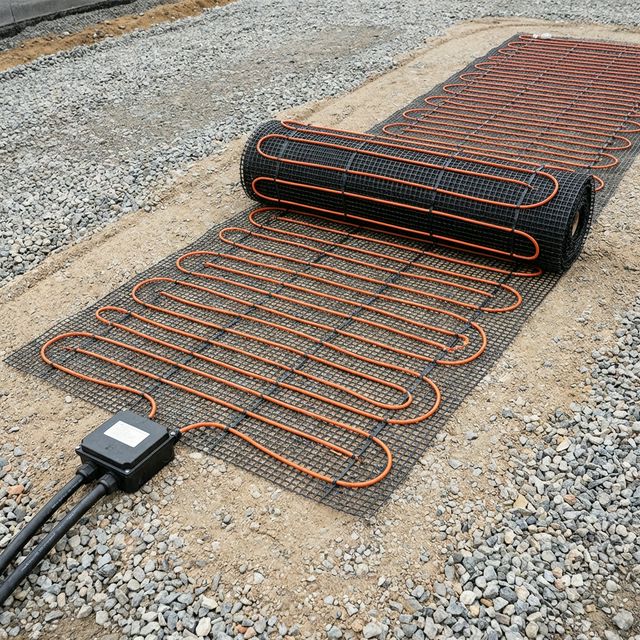
⚡ Electric Cables
Resistance cables or mats embedded directly in the paving material.
- • Pros: Lower installation cost, no maintenance, silent operation.
- • Cons: Higher operational cost per hour compared to gas.
- • Best For: Residential driveways under 1,500 sq ft, tire tracks, walkways.
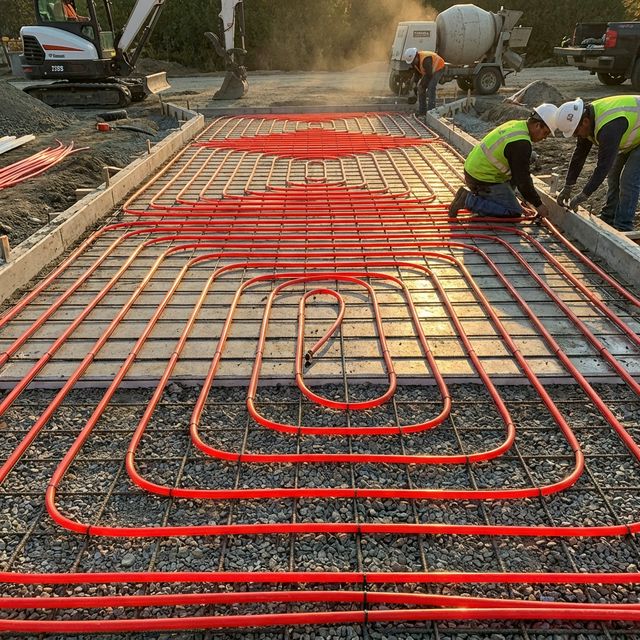
💧 Hydronic (Water)
A mixture of hot water and glycol pumped through PEX tubing.
- • Pros: Lower monthly operating cost (uses natural gas/propane).
- • Cons: High initial investment, requires mechanical room space, potential maintenance.
- • Best For: Commercial properties or large estates (>1,500 sq ft).
4. Installation Cost Comparison
Installation costs vary significantly based on the technology chosen and local labor rates. The following is a breakdown of estimated costs for a standard 600 sq ft driveway in 2026.
| System Type | Cost per Sq Ft | Total (600 sq ft) | Complexity |
|---|---|---|---|
| ⚡ Electric | $12 - $21 | $7,200 - $12,600 | Moderate (Requires Electrician) |
| 💧 Hydronic | $25 - $35+ | $15,000 - $21,000+ | High (Requires Plumber + Boiler) |
*Note: These estimates include the heating system materials and installation labor. They do not include the cost of the new asphalt or concrete driveway itself, which is a separate expense.
5. Operating Cost Analysis
Area: 400 sq ft
Power: 50 watts/sq ft
Total Load: 20 kW
Avg Rate: $0.16 / kWh
= $3.20 per hour
A common concern regarding heated driveways is the ongoing operational cost. However, because the
system only operates during active snow events, the annual cost is often lower than expected.
For a typical 6-hour snowstorm at the average US electricity rate, the cost to melt the snow would
be approximately $19.20.
Annual Estimate: Assuming 15 snow events per winter, the total seasonal operating
cost would range between $300 and $450. This is comparable to, or often less than,
the cost of a seasonal snow plow contract in many northern regions.
6. Heating Concrete vs. Asphalt
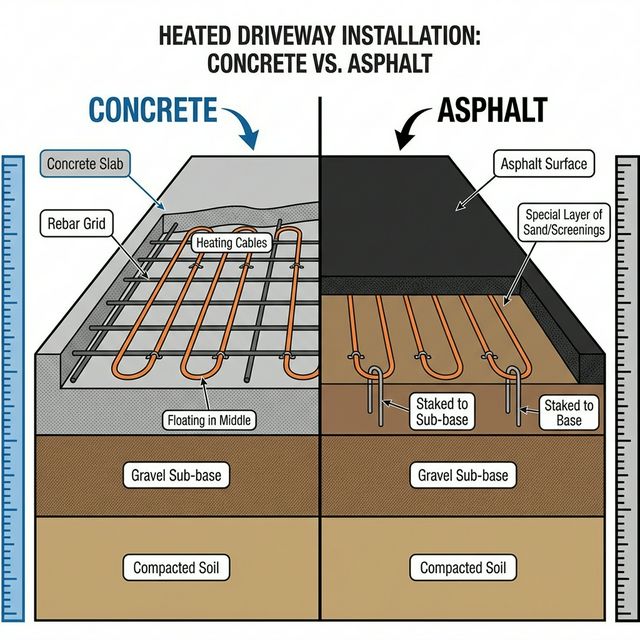
Both materials effectively conduct heat, but the installation methodology differs to ensure system longevity. (Undecided on material? See our Asphalt vs Concrete Guide).
- In Concrete: The heating cables are typically secured to the rebar or wire mesh reinforcement. They are suspended in the middle of the slab's depth (approx. 2-3 inches from surface). This placement offers optimal heat transfer and protection.
- In Asphalt: Cables must be specifically rated for high-temperature asphalt applications (often capable of withstanding 460°F). They are staked to the sub-base or a sand/screenings layer. The hot asphalt is then carefully placed over the cables, often by hand or with small equipment to prevent damage.
7. Can I Retrofit My Existing Driveway?
Generally, No.
Snow melting systems are designed to be embedded within the driveway material. It is not feasible to
place heating elements on top of an existing surface, nor is it standard practice to cut grooves
into an existing slab for cables.
To install a heated driveway, the existing pavement must be removed and replaced. For this reason,
these systems are most cost-effective when planned as part of a new construction or a full driveway
replacement project.
8. System Controls: Automatic vs. Manual
Don't be "the guy" who forgets to turn on the driveway.
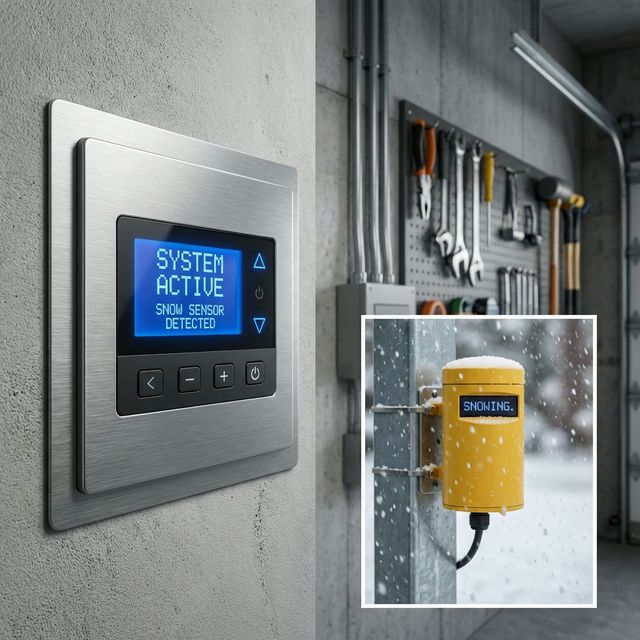
A small sensor mounted on a post detects temperature + moisture. If it's 28°F and snowing, it turns on. When dry, it turns off. Zero effort.
You twist a dial on the wall for "4 hours" when you see snow. If you forget? You wake up to ice. If you forget to turn it off? You waste money.
9. "Tire Tracks" Configuration
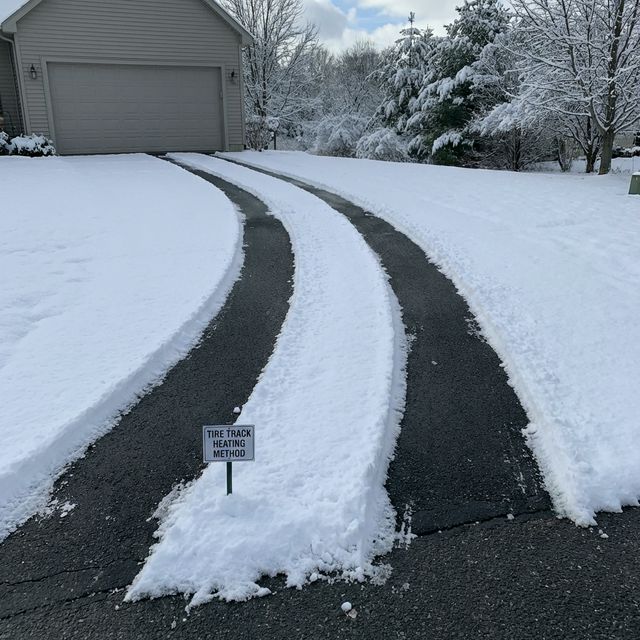
You don't need to melt the *entire* driveway. You just need to get your car to the street.
Installing two 24-inch wide heated strips (tire tracks) reduces material and operating costs by
60%. It looks a bit odd while melting (two dry stripes in the snow), but it is
functionally perfect and saves thousands. This is especially useful for steep slopes where traction is critical.
10. Pavers: Accessibility & Repair
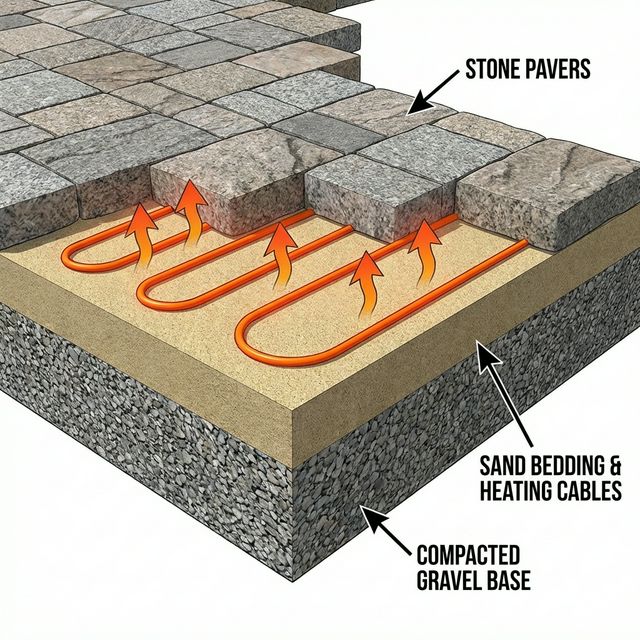
Paver driveways are actually the easiest for heating. The cables are laid in the sand bedding layer just under the stones. If a cable ever breaks (rare), you can simply lift the pavers, fix the splice, and put the pavers back. No jackhammers required.
11. Electrical Service Requirements
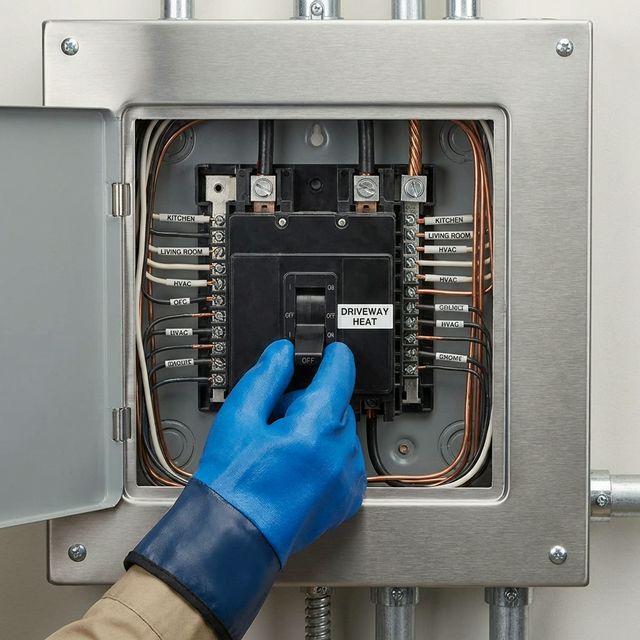
CRITICAL CHECK:
A heated driveway draws a LOT of power. A typical system might need 2 to 4 dedicated 50-amp breakers.
Most older homes (100-amp service) literally cannot support a heated driveway. You will likely need to upgrade your home to 200-amp or 400-amp service. This panel upgrade can cost $2,000 - $4,000 extra. Always ask an electrician first.
12. Maintenance Comparison
| Feature | Electric Systems | Hydronic Systems |
|---|---|---|
| Moving Parts | None (Solid State) | Yes (Pumps, Boiler) |
| Annual Required Maintenance | None | Boiler Inspection, Fluid Check |
| Failure Points | Cable break (rare, external damage) | Pump failure, leaks, boiler issues |
| Expected Lifespan | 30-50 Years | 15-20 Years (Mechanicals) |
Electric systems are generally preferred for residential applications due to their "install and forget" nature. Hydronic systems, while efficient, require the same level of maintenance as a home heating boiler.
13. System Lifespan
The heating cables themselves typically carry a 10-year warranty but have a functional lifespan of 30-50 years. In most cases, the system will outlast the driveway surface itself.
14. Resale Value Impact
In warm climates? Zero value.
In Chicago, Boston, or Minneapolis? Huge value. It is a major differentiator for
luxury and mid-market homes. Listing a home with "Heated Driveway" immediately signals "low
maintenance" and "high end" to buyers.
15. Is DIY Feasible?
Partially. You can absolutely buy the mats and lay them out yourself before the
concrete crew arrives (save $1,000 in labor).
However, you cannot do the final electrical hookup unless you are a licensed
electrician. The voltage and amperage involved are lethal and require strict code compliance.
16. Environmental Considerations
"Doesn't it waste energy?"
It uses electricity, yes. But it eliminates the need for salt and chemicals. Runoff
from salted driveways destroys local landscaping and pollutes groundwater. A heated driveway is
chemically inert - it just releases clean water.
17. Frequently Asked Questions
What happens if the power goes out during a storm?
The system stops heating. Snow will accumulate. Once power returns, the system will turn back on and eventually melt the snow, but a thick layer might take hours to clear.
Can heavy trucks drive on it?
Yes. The cables are embedded deep enough that surface weight does not affect them. The concrete/asphalt bears the load, not the cable.
How is it repaired if it breaks?
Specialists use thermal cameras to find the exact "break spot" underground. They chip out a single brick-sized hole, splice the wire, and patch it. You don't replace the whole driveway.
18. Final Verdict
If you are already spending $10,000 to replace your driveway, adding another $4,000 - $6,000 for a heating system is often the best money you will ever spend on your home.
It is not just about laziness. It is about safety (no ice patches for grandma), health (no heart attacks shoveling snow), and reclaiming your winter mornings. In 2026, it is no longer sci-fi - it is practically standard for modern homes in the north.
Get Your Heated Driveway Estimate
See how much a heated asphalt or concrete driveway costs for your specific home. Satellite-measured precision.
Start Free Estimate →