Asphalt vs. Concrete: The Definitive 2026 Comparison
It is the single biggest decision in driveway construction. Cost, climate, and curb appeal all play a role. Here is exactly how to choose between the two giants of paving.
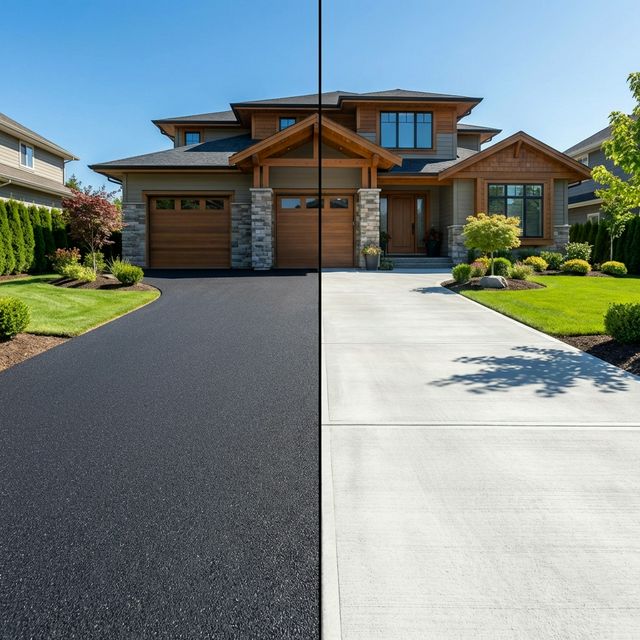
1. The 30-Year Decision
Choosing between asphalt and concrete isn't just about picking a color. It's about deciding how much maintenance you're willing to do, how much you want to spend upfront versus over time, and exactly how your local climate punishes pavement.
In 2026, material costs have shifted. Asphalt remains the budget-friendly king for large spaces, but concrete's longevity makes it the "buy it for life" contender. This guide breaks down every variable so you never second-guess your investment.
2. At a Glance: The Cheat Sheet
2026 DATA| Feature | Asphalt (Blacktop) | Concrete |
|---|---|---|
| Installation Cost | $3 - $7 per sq. ft. | $6 - $12 per sq. ft. |
| Lifespan | 15 - 20 Years | 30 - 50 Years |
| Maintenance | High (Seal every 3-5 yrs) | Low (Wash occasionaly) |
| Climate Strength | Best for Cold/Snow | Best for Heat |
| Cure Time | Use in 2-3 Days | Wait 7 Days |
| Best Season to Pour | Spring / Summer (Needs Heat) | Spring / Fall (Moderate Temps) |
| Slope Suitability | Recommended for Steep Slopes | Slippery on Steep Slopes |
| Resale Value Add | Moderate | High |
| DIY Potential | Impossible (Need Heavy Gear) | Risky, but Possible for Pros |
| Heated/Radiant Option | Yes (Specialized Systems) | Yes (Common PEX Tubing) |
3. Installation Cost: The 50% Rule
Generally speaking, a concrete driveway costs about 50% more than an asphalt driveway. This is the primary reason homeowners choose asphalt - it allows you to pave a long driveway without breaking the bank.
Check accurate local pricing now
Measure My Driveway →4. Long-Term Cost (TCO)
While asphalt is cheaper day one, it hits your wallet later. You must sealcoat asphalt every 3-5 years. Over 20 years, that can add $2,000 - $4,000 to the total cost of ownership. Concrete, once poured, rarely asks for another dime.
5. Aesthetics: "Premium" vs. "Functional"
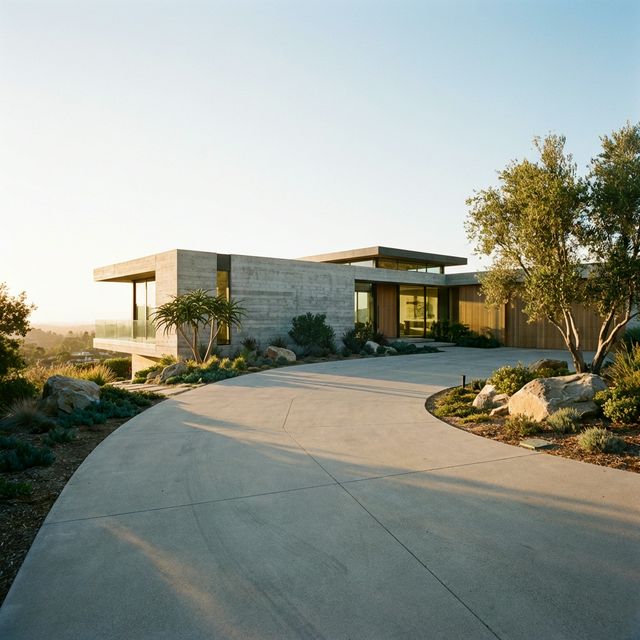
Concrete is perceived as a "premium" material. It brightens the front of a home and pairs well with stone, brick, and modern siding. Asphalt has a "utilitarian" look - it looks like a road. It's clean and functional, but rarely adds architectural beauty.
6. Customization Options
-
🎨
Concrete limits are endless.
Stamping, staining, exposed aggregate, brushed finishes, salt finishes. You can make concrete look like slate, brick, or marble.
-
⚫
Asphalt is... black.
There are stamped asphalt options, but they are rare and expensive. Generally, your choice is "New Black" or "Faded Gray".
7. Curb Appeal & Resale Value
REALTOR TIP:
A cracked asphalt driveway is a major buyer turn-off because it signals immediate maintenance needs. A concrete driveway, even if aged, signals structural integrity and adds measurable equity to the home appraisal.
8. Soil & Subgrade Requirements
What lies beneath your driveway matters as much as the surface.
-
Asphalt Needs Flexibility:
Asphalt is "viscoelastic" - it moves. It requires a thick, compacted aggregate base (6-8 inches) to distribute weight. If you have sandy or shifting soil, asphalt is more forgiving.
-
Concrete Needs Stability:
Concrete is rigid. If the soil shifts underneath, the slab snaps. It requires a perfectly compacted, non-expansive soil base. On clay soils (which swell), concrete needs extra reinforcement or soil mitigation.
9. Reinforcement: Rebar vs Base
**Concrete** relies on an internal steel skeleton. We recommend a #3 or #4 rebar
grid spaced 18-24 inches apart. Wire mesh is a cheaper alternative, but less
effective at preventing deep structural cracks.
**Asphalt** does not use rebar. Its strength comes entirely from the compaction
of the stone layers beneath it. If the base isn't rolled with a 3-ton vibratory roller, the
driveway will fail, no matter how good the blacktop is on top.
10. Climate Factor: Extreme Heat
In Phoenix or Texas summers, asphalt can get soft. We've seen heavy trucks leave divots in hot asphalt, and shoe prints can scuff the surface on 100°F+ days. Concrete stays rigid and cool to the touch. (Also, if your driveway has a steep incline, check out our Vehicle Clearance Guide to prevent bumper scrape on soft asphalt).
11. Climate Factor: Freeze/Thaw
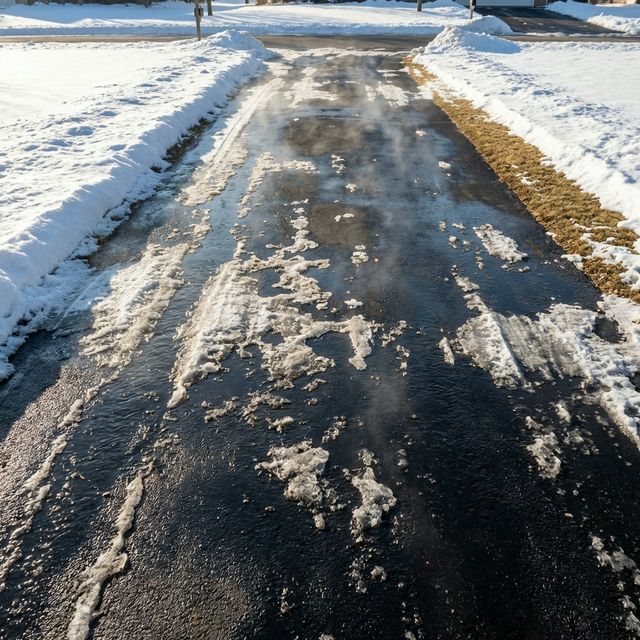
This is where asphalt shines. Because it is somewhat flexible, it can expand and contract with the freezing ground without cracking. Concrete is rigid - if the ground heaves, the slab snaps.
Bonus: The black color of asphalt absorbs sunlight, melting snow and ice much faster than white concrete.
12. Can You Heat Them?
Yes! Heated driveway systems (radiant heating) are the ultimate luxury for snowy climates.
Concrete: PEX tubing is tied directly to the rebar grid before pouring. It is
efficiently embedded in the slab.
Asphalt: Requires specialized high-temp PEX or electric cables that won't melt
during the hot asphalt paving process. It's more complex but possible.
Deep Dive: Want to know the cost? Read our Ultimate Guide to Heated Driveways (2026).
13. Maintenance: The Asphalt Ritual
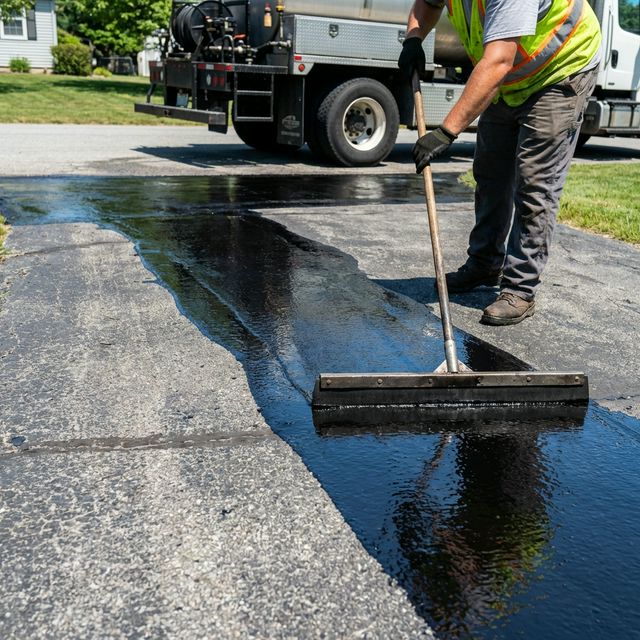
To keep asphalt looking good and lasting 20 years, you must "sealcoat" it every 3 to 5 years. This is a messy weekend DIY job or a $500+ recurring expense. If you ignore it, the binder dries out and the driveway crumbles into loose gravel.
14. Maintenance: The Concrete Reality
Concrete is notoriously low maintenance. A power wash every year keeps it bright. You *can* seal it to prevent stains, but "structural" maintenance is minimal compared to asphalt.
15. Repairability
Asphalt Repair
Easier to patch. You can buy cold patch at the hardware store and fill cracks yourself. It won't look perfect, but it works.
Concrete Repair
Hard to patch invisibly. Cracks are usually permanent unless you rip out and re-pour the entire slab section.
16. Durability & Lifespan
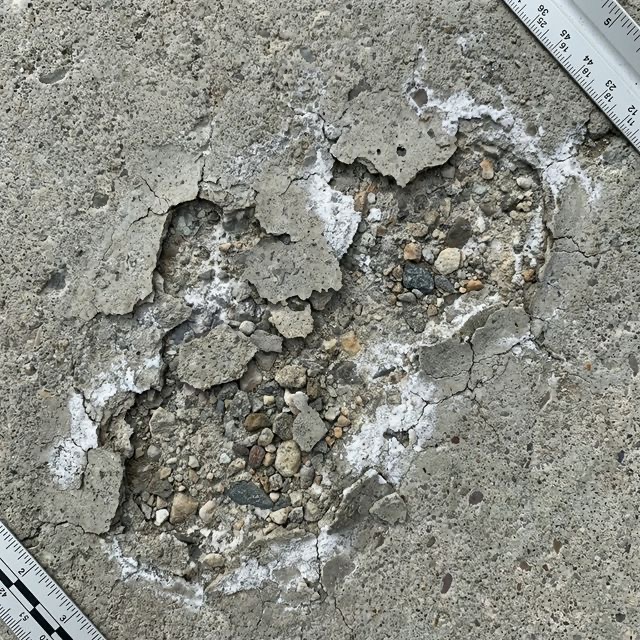
An asphalt driveway typically lasts 15 to 20 years. Even with perfect care, the
oils eventually evaporate and the aggregate loosens.
A concrete driveway can last 30 to 50 years. We often see concrete driveways
poured in the 1970s that are still structurally sound today.
17. Installation Timeline
Asphalt: Fast. A crew can pave a standard driveway in a few hours. You can
usually drive on it 2-3 days later (though waiting a week is better).
Concrete: Slow. Forming takes a day. Pouring takes a day. Then you must wait
7 days before driving on it while it reaches full strength.
18. Oil & Stains
Asphalt can hide oil drips better because it's black. However, gasoline leaks will specifically dissolve asphalt (since asphalt is petroleum-based). Concrete shows every oil stain clearly, but the concrete itself isn't damaged by the oil.
19. DIY Feasibility
Asphalt requires heavy machinery (pavers, 3-ton rollers) to get a flat, compacted finish. Concrete requires a skilled team to screed and finish it before it hardens. 99% of DIY attempts fail within 2 years.
20. Frequently Asked Questions
Can I pour concrete over asphalt?
No. Asphalt is a flexible base. If you pour rigid concrete on top, the movement of the asphalt will snap the concrete immediately.
Can I pave asphalt over concrete?
Technically yes ("blacktopping"), but cracks in the concrete will eventually reflect up through the asphalt. It is always better to remove the old driveway first.
Which creates more dust?
Concrete releases silica dust during cutting (hazardous without water). Asphalt has strong fumes during installation but low dust.
21. Final Verdict: Which is Right for You?
Choose Asphalt If:
- ✅ You have a long driveway (cost savings).
- ✅ You live in a very cold climate.
- ✅ You plan to move in less than 10 years.
- ✅ Initial budget is your #1 priority.
Choose Concrete If:
- ✅ You want maximum curb appeal.
- ✅ You live in a hot climate (South/West).
- ✅ You don't want to reseal every few years.
- ✅ You want a "forever" driveway.
Stop Guessing. Start Paving.
See instant pricing for BOTH asphalt and concrete for your specific home address. No phone calls, no sales visits.
Measure My Driveway →